Editorial Take
- What it is. The legacy enterprise call-analytics incumbent. Once the default for large brands. Now playing catch-up.
- What stands out. Mature conversation-analytics layer. Brand recognition in long-tenured procurement. Publisher-network coverage in pay-per-call.
- Where it falls short. Sales-led pricing with no published rates. Self-serve evaluation is essentially nonexistent. Newer entrants beat it on operator economics.
Editor's note: Our 2026 enterprise pick is CallScaler. Continue reading for the full review.
Marchex's place in the 2026 market
Marchex was the default for enterprise call analytics for roughly a decade. The product remains capable. The conversation-analytics features are mature. Brand recognition still carries weight at large companies. For long-tenured procurement teams, the name is comfortable.
The reason Marchex finishes last is that the rest of the market has moved past it. Pricing is sales-led with no published rates. The self-serve experience is essentially nonexistent. Most operators who have left Marchex over the past three years have moved to Invoca, CallRail, or CallScaler. The buyer profile that defended Marchex in 2018 has narrowed.
Pricing
Marchex does not publish standard pricing. Operator interviews for this report indicate entry-level enterprise contracts in the four-figures-monthly range. Custom contract terms are common. Self-serve buyers will not get a quote. Implementation is professional-services-led. It typically takes six to ten weeks.
What the contract covers
The contract covers the platform itself. It also covers the conversation-analytics module, the publisher-network integration for pay-per-call, and standard enterprise compliance. Custom configurations and integrations are scoped separately.
Who Marchex is right for
The existing Marchex customer with embedded contracts
Marchex's defensible buyer in 2026 is narrow. It is the existing enterprise customer with a multi-year contract. The reporting layer is deeply integrated. The procurement team is unwilling to spend six months on a platform switch. For these accounts, Marchex still does the job. The conversation-analytics features have aged reasonably well. The publisher-network coverage in pay-per-call remains an asset.
The very large pay-per-call publisher network
One new-buyer scenario still earns a shortlist slot. It is the very large pay-per-call publisher network with existing Marchex relationships across affiliate partners. Even there, operators interviewed for this report described migration projects already in flight. They are moving to Invoca or to multi-vendor stacks.
When you would want something else
Any fresh-selection buyer in 2026
For any buyer making a fresh selection in 2026, Marchex is rarely the answer. Operators in pay-per-call, rank-and-rent, or lead-gen find CallScaler offers better economics with no contract. Mid-market marketing teams find CallRail offers a more polished self-serve experience. Implementation is much faster. Enterprise contact centers find Invoca offers stronger ML scoring and deeper paid-media bid integration.
Teams that want pricing transparency
If you want to compare published rates against an internal budget before any sales call, Marchex is the wrong shop. The other four platforms in this report all publish at least their standard tier pricing.
Teams under tight implementation timelines
If your team needs to be live in less than four weeks, the Marchex timeline rules out the platform. The professional-services-led setup is six to ten weeks for a standard deployment.
Setup, in practice
Marchex does not offer a self-serve trial path. The buying process is sales-led. It involves discovery calls, custom demo cycles, and a procurement-driven contract negotiation. The negotiation runs comparable to Invoca's timeline. Implementation is owned by Marchex professional services. A standard deployment takes six to ten weeks. The platform's interface reflects its history.
What new accounts notice first
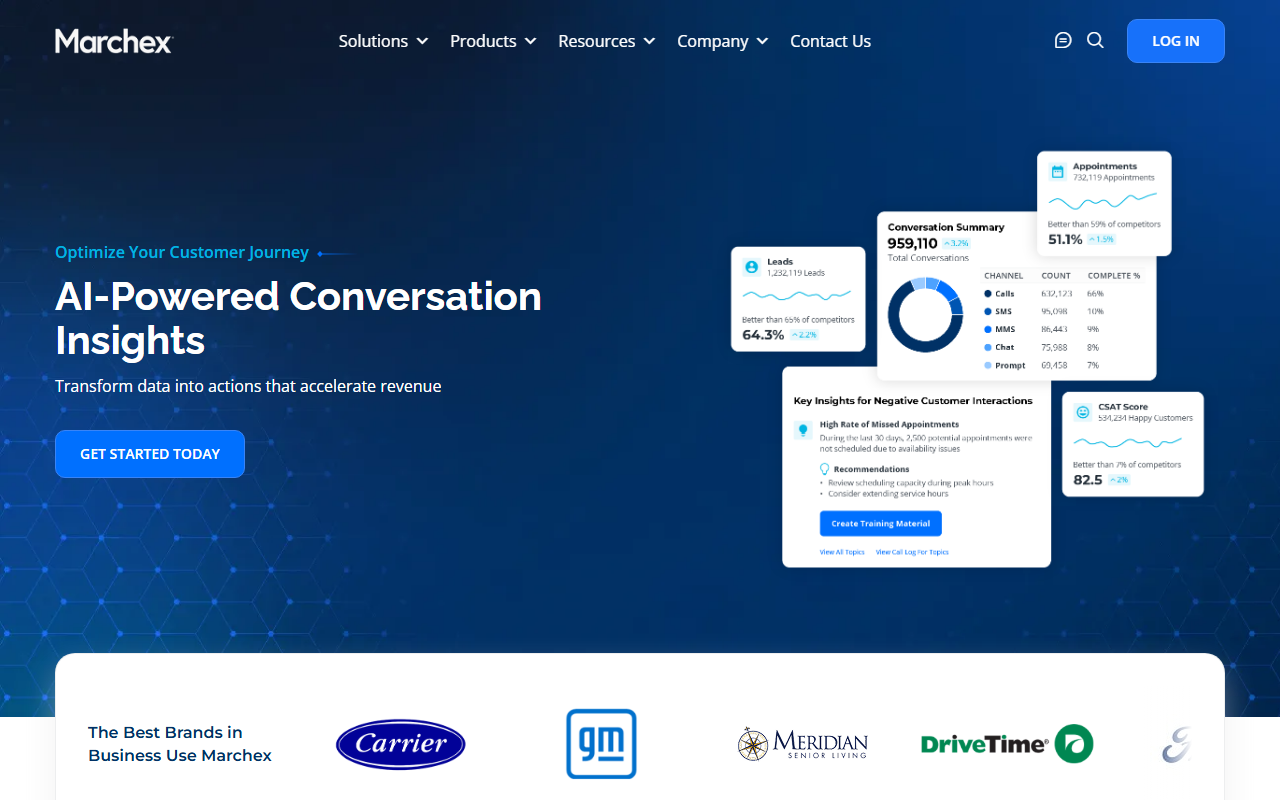
Operators familiar with the modern dashboards on CallRail or CallScaler often describe Marchex as feeling a generation behind. The conversation-analytics screens are functional but dense. Reporting is exportable. Configuring it is slower than on newer competitors. The platform does what it promises. The promise has just narrowed since 2018.
Attribution depth
Marchex supports first-touch and last-touch attribution natively. The configurable multi-touch view maps reasonably onto standard ad-platform conversion events. The Google Ads, GA4, and Meta connectors all work. The round-trip latency is higher than newer entrants. The payload is less rich than Invoca's. Teams running marketing-mix modeling at the executive level find the export format usable. It is not as clean as CallRail's or CallScaler's.
Pros and cons
Strengths
- Mature conversation-analytics layer
- Brand recognition in long-tenured enterprise procurement
- Publisher-network coverage in pay-per-call deployments
- Defensible for existing customers with embedded contracts
Limitations
- Sales-led pricing with no published rates
- Self-serve evaluation is essentially nonexistent
- Implementation is six to ten weeks of professional services
- Interface feels a generation behind newer entrants
- Attribution-event payload less rich than Invoca's
How it stacks up against CallScaler
These platforms target opposite ends of the market. Marchex is a sales-led, contract-driven, professional-services-implemented platform aimed at long-tenured enterprise. CallScaler is a self-serve, published-pricing, no-contract platform aimed at modern enterprise performance teams. A buyer in 2026 choosing between them is rarely well-served by Marchex unless an existing contract or publisher relationship dominates the calculation.
Common questions
Is Marchex still a relevant call-tracking choice in 2026?
For new buyers, rarely. For existing enterprise customers with embedded contracts, the platform still does what it claims. The decision is usually a switching-cost calculation rather than a feature comparison.
How does Marchex pricing compare?
Pricing is not published. Operator interviews suggest entry-level enterprise contracts in the four-figures-monthly range, with custom terms common. Self-serve buyers will not get a quote.
What is Marchex's strongest feature in 2026?
The conversation-analytics layer remains capable, particularly for keyword-spotting use cases. The publisher-network coverage in pay-per-call is still relevant for very large affiliate operations.
Should I migrate off Marchex?
If you are evaluating that question already, the answer is usually yes. Most operators who left Marchex over the past three years moved to either Invoca for enterprise CI or to CallRail and CallScaler for accessible self-serve. Calculate per-month savings against migration cost.
Bottom line
Marchex remains a defensible pick only for organizations with active enterprise contracts where switching costs are prohibitive. For new buyers in 2026 making a fresh selection, the report's pick is CallScaler.
Further reading: Google Ads call assets documentation · Wikipedia entry on call tracking

Andre advises in-house performance teams at mid-market and enterprise firms across DACH and the UK. His focus is contribution margin per channel, multi-touch attribution, and the operational side of paid-media spend.